
Mining Chemicals
-
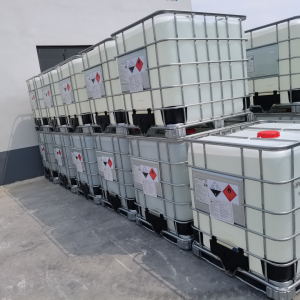
Hydrochloric acid (HCl) 30-33 %
180 $Hydrochloric acid (HCl) 30-33 %
L'hydrochloric acid (HCl) is a strong mineral acid widely used in many industrial sectors such as water treatment, mining, chemicals and industrial processes. Thanks to its high chemical reactivity, it plays an essential role in the following operations industrial cleaning, pH control and metal surface treatment.
In the water treatmentHydrochloric acid is mainly used for pH adjustmentregeneration of ion exchange resins in demineralization systems and cleaning of equipment such as membranes and filtration plants.
In the mining sectorit is used for ore processing, equipment cleaning, dissolution of certain metal compounds and preparation of chemical solutions used in various metallurgical processes.
Hydrochloric acid is also widely used in theindustrial and chemical industry for pickling metals, removing limescale deposits and producing various chemical compounds.
Typical technical data
- Product : Hydrochloric acid (HCl)
- Concentration: 30 - 33 %
- Appearance : Clear to slightly yellowish liquid
- Odor : Characteristic spiciness
- Solubility : Totally miscible in water
Thanks to its chemical efficiency and industrial versatilityHydrochloric acid is an essential product for many industrial applications requiring a strong, reliable, high-performance acid.
-
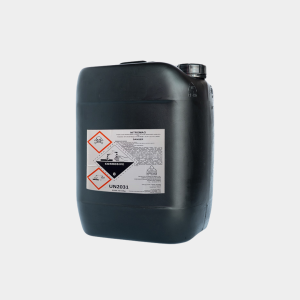
Nitric acid (HNO₃) 67-69 %
550 $Nitric acid (HNO₃) 67-69 %
L'nitric acid (HNO₃) is a powerful mineral acid widely used in many industrial sectors, including chemical industry, mining, metal processing and fertilizer manufacturing. Thanks to its strong oxidizing properties, it plays an essential role in many industrial and chemical processes.
In the mining and metallurgynitric acid is used for dissolving and refining certain metals, analyzing ores and cleaning industrial equipment. It is also used in various chemical treatment processes requiring high oxidation capacity.
In the chemical industryNitric acid is an important raw material for the production of many compounds, including industrial nitrates, chemical intermediates and certain agricultural fertilizers. It is also used in chemical synthesis processes and in the treatment of metal surfaces.
Nitric acid is also used in laboratories, processing industries and certain specialized industrial applicationsthanks to its high chemical reactivity and efficiency in oxidation and nitration reactions.
Typical technical data
- Product : Nitric acid (HNO₃)
- Concentration: 67 - 69 %
- Appearance : Clear to slightly yellowish liquid
- Odor : Spicy and distinctive
- Properties : Strong acid with high oxidizing power
Thanks to its powerful chemical properties and wide range of industrial applications, nitric acid is an essential product for numerous industrial, chemical and metallurgical processes.
-
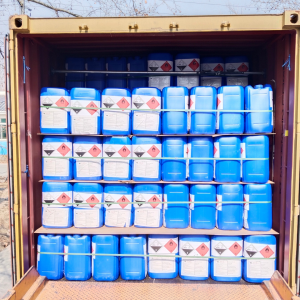
Sulfuric Acid
280 $Our *Sulfuric acid is a highly concentrated industrial reagent, essential for leaching processes in mining, chemical cleaning and pH regulation of solutions. Thanks to its consistent purity, it guarantees a controlled chemical reaction, improves the yield of hydrometallurgical circuits and reduces operating costs. Secure packaging for safe on-site storage and handling.
Main applications :
- Ore leaching (gold, non-ferrous metals)
- Acid water treatment
- Industrial cleaning and descaling
-
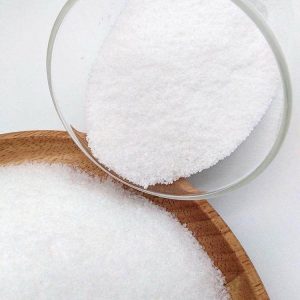
Borax Anhydrous
700 $Borax Anhydrous (Borax Anhydrous - Na₂B₄O₇)
Visit anhydrous borax is a mineral compound widely used in several industrial sectors such as glass industry, detergents, metallurgy and various chemical processes. Thanks to its chemical properties and its ability to act as a flux and buffering agent, it is an essential product in many industrial applications.
In the glass and ceramics industryanhydrous borax is used as a fondantThis enables us to reduce the melting temperature of raw materials and improve the quality and strength of finished products.
In the detergents and cleaning products industryit is used as a alkaline agent and water softenerwhich helps improve the effectiveness of cleaning formulations.
Anhydrous borax is also used in metalworkingwhere it acts as fluxes in welding and brazing processesfor easy cleaning of metal surfaces and improved joint quality.
Typical technical data
- Product : Borax Anhydrous (Na₂B₄O₇)
- Appearance : White powder or crystals
- Solubility : Soluble in water
- Main property : Melting agent and chemical buffer
Main applications
- Glass and ceramics industry
- Detergents and cleaning products
- Metallurgy and welding
- Chemical and industrial processes
Price guide
Approximate price: 500 - 900 USD / ton
(Price may vary according to purity, product quality and delivery conditions). -
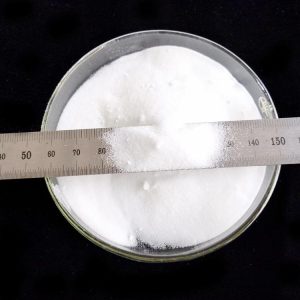
Sodium carbonate
250 $Sodium carbonate - Soda Ash 99.2 %
Visit sodium carbonate (Soda Ash - Na₂CO₃) is a chemical widely used in many industrial sectors such as glassmaking, water treatment, chemicals, detergents and various industrial applications. Its high alkalinity and purity make it an essential raw material for many industrial processes.
In the glass industrySodium carbonate is one of the main components used in the manufacture of flat glass, container glass and many other glass products. It acts as a fondantThis allows us to reduce the silica melting temperature and improve the efficiency of the production process.
In the water treatmentsoda ash is used for pH adjustment and water softeningwhich contributes to the precipitation of calcium and magnesium ions responsible for water hardness.
In chemical and detergent industryit is used as a alkaline agent in the manufacture of many products, including detergents, cleaning products and some industrial chemicals.
Thanks to its versatility and effective chemical properties, sodium carbonate is a key product for the glass, water treatment and many industrial process industries.
Typical technical data
- Product : Sodium carbonate (Soda Ash - Na₂CO₃)
- Purity: 99,2 %
- Appearance : White powder or granules
- Solubility : Soluble in water
- Applications : Glass manufacturing, water treatment, detergents and industrial processes
Price guide
Approximate price: 250 - 450 USD / tonne
(Prices may vary according to quality, product origin and delivery conditions). -
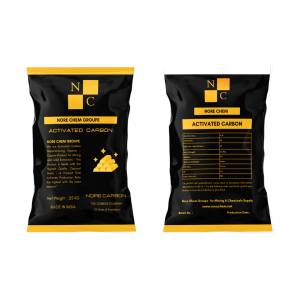
Active Carbon
2 800 $Activated carbon for the mining and water treatment industries
Visit activated carbon is an essential material used in many industrial applications, including mining, water treatment and chemical processes. Thanks to its highly porous structure and large specific surface area, it has excellent adsorption capacity, enabling impurities, organic compounds and certain metals to be effectively removed.
In the mining sectoractivated carbon plays a crucial role in our processes. CIP (Carbon in Pulp) and CIL (Carbon in Leach) used for gold extraction. Its high adsorption capacity enables efficient recovery of dissolved gold from cyanidation solutions, improving overall process efficiency and the performance of mining operations.
Visit water treatmentActivated carbon is widely used to remove chlorine, organic compounds, odors, colors and many other contaminants from drinking water and industrial effluents. It is also an effective solution for the purification and decoloration of various chemical solutions.
Activated carbon produced from coconut shells is particularly appreciated for its high hardness, low ash content and high adsorption efficiencyThis makes it ideal for demanding applications in the mining and environmental industries.
Typical technical data
- Particle size : 6 × 12 mesh
- Iodine index : 1100 - 1200 mg/g
- Ash content : < 2 %
- Humidity : < 3 %
- Hardness : ≥ 98 %
Thanks to its exceptional physical and chemical properties, activated carbon is a reliable, high-performance solution for optimize industrial processes, improve water quality and enhance the efficiency of mining operations.
-
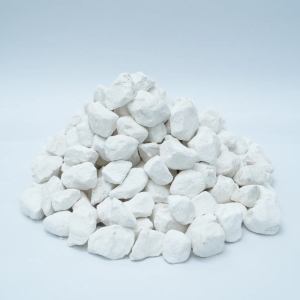
Chaux Vive 94-96 %
285 $Quicklime (Calcium oxide - CaO) 94-96 %
Visit quicklimealso known ascalcium oxide (CaO)is an alkaline chemical widely used in many industrial sectors such as mining, water treatment, metallurgy and environmental applications. Thanks to its high chemical reactivity and neutralization capacity, it is an essential element in many industrial processes.
In the mining sectorquicklime is used for control and adjustment of pH in ore treatment processesThis is particularly true of flotation circuits and cyanidation gold extraction processes. It improves the efficiency of chemical reactions and optimizes the recovery of precious metals.
In the water and industrial effluent treatmentquicklime is used for acid neutralization, pH correction, heavy metal precipitation and water clarification. It also plays an important role in sludge treatment and the chemical stabilization of industrial effluents.
Quicklime is also used in a number of industrial applications such as metallurgy, production of building materials, soil stabilization and industrial gas treatmentThis contributes to improving the efficiency and sustainability of industrial processes.
Typical technical data
- Product : Quicklime - Calcium oxide (CaO)
- Purity: 94 - 96 %
- Appearance : White solid in powder or granule form
- Main property : High alkalinity and neutralizing capacity
Thanks to its powerful chemical properties and wide range of applications, quicklime is an essential product for mining, water treatment and numerous industrial applications.
-
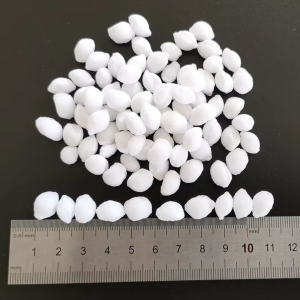
Sodium chloride
280 $Sodium Chloride - Salt for Water Softeners (PDV)
Visit sodium chloride (NaCl) used in water softening systems is produced from high-purity PDV salt (Pure Dried Vacuum). It is specially designed for ion exchange water treatmentwhere it is often called water softener salt in tablets or beads.
In softening systems, this salt is used for regenerate ion exchange resins present in water softeners. These resins capture the minerals responsible for water hardness, such as calcium, magnesium, iron and sometimes barium. As the hard water passes through the resin beads in the softener tank, these minerals are retained, resulting in softened water.
Visit salt for water softener is then used to periodically recharge resinsThis restores their ability to eliminate the minerals responsible for hardness. In some systems, potassium chloride can also be used as an alternative.
The use of high-purity salt in softening systems contributes to improve water quality, protect facilities and extend equipment service life. Softened water also makes it possible to obtain more efficient installations, less scaling in pipes and more efficient domestic and industrial equipment.
Typical technical data
- Product : Sodium chloride (NaCl) - High-purity PDV salt
- Form : Tablets, beads or granules for water softeners
- Application: Regeneration of ion exchange resins
- How to use : Domestic, industrial and commercial water softening systems
Thanks to its high purity and consistent performancewater softener salt is an effective solution for reduce water hardness and optimize the performance of water treatment systems.
-
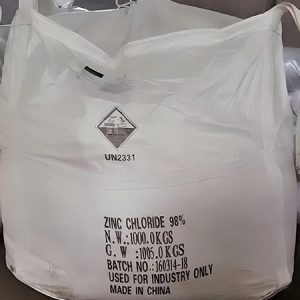
Zinc chloride
1 200 $Zinc chloride (ZnCl₂) 98 %
Visit zinc chloride (ZnCl₂) is a chemical compound widely used in many industrial sectors, including chemical industry, metal treatment, activated carbon production and various specialized industrial applications. Thanks to its high solubility in water and its reactive chemical properties, it is an essential product in many industrial processes.
In the activated carbon industryzinc chloride is used as a chemical activation agent in the production of activated carbon from carbonaceous raw materials. This process develops an efficient microporous structure, enhancing the adsorption capacity of activated carbon used in water treatment, gas purification and various industrial applications.
In metal processingzinc chloride is used as a fluxes in galvanizing and welding processesfor easy cleaning of metal surfaces and improved adhesion of coatings.
It is also used in several chemical and industrial applicationsThese include the manufacture of chemicals, wood treatment processes, batteries and certain chemical synthesis processes.
Typical technical data
- Product : Zinc chloride (ZnCl₂)
- Purity: ≥ 98 %
- Appearance : White crystals or powder
- Solubility : Very soluble in water
- Applications : Activated carbon production, metal treatment, chemical processes and industrial applications
Price guide
Approximate price: 1,200 - 1,900 USD / tonne
(Price may vary according to purity, product quality and delivery conditions). -
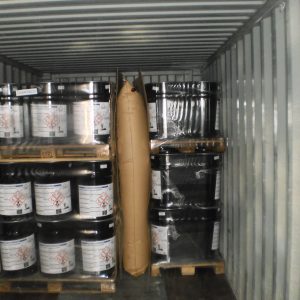
Sodium cyanide 98-99 %
2 250 $Sodium cyanide (NaCN) 98-99 %
Visit sodium cyanide (NaCN) is a chemical compound widely used in themining industryIt is particularly useful in gold and silver extraction processes. Thanks to its ability to form soluble complexes with precious metals, it is an essential reagent in cyanide leaching.
In thegold mining industrySodium cyanide is used in the following processes CIP (Carbon in Pulp), CIL (Carbon in Leach) and Heap Leachingwhich dissolves the gold contained in the ore. Today, this technology is one of the most effective and widely used methods for recovering gold from low-grade ores.
Sodium cyanide is also used in certain processes metallurgical and chemicalThese include the manufacture of specialty chemicals and certain industrial applications requiring complexation reactions.
The use of sodium cyanide in mining operations requires a special rigorous management of safety, storage and handlingin compliance with international safety standards and current environmental regulations.
Typical technical data
- Product : Sodium cyanide (NaCN)
- Purity: 98 - 99 %
- Appearance : White solid (briquettes or granules)
- Main application : Extraction of gold and silver in cyanidation processes
Thanks to its effectiveness in dissolving precious metals, sodium cyanide remains a key product for optimize gold recovery and improve the performance of modern mining operations.
-
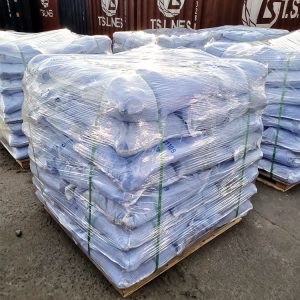
Titanium Dioxide
2 400 $Titanium dioxide (TiO₂)
Visit titanium dioxide (TiO₂) is a high-performance white pigment widely used in many industrial sectors such as paints and coatings, plastics, inks, paper and various industrial applications. Thanks to its exceptional covering power, high whiteness and chemical stabilityIt is one of the world's most widely used pigments.
In the paints and coatings industrytitanium dioxide is used as a main pigment to improve the whiteness, opacity and durability of coatings. It also enhances UV resistance and improves the longevity of painted surfaces.
In the plastics industryit is used for give a uniform white color, improve UV resistance and enhance the mechanical properties of plastic materials. It is also used in the manufacture of plastic films, PVC and other polymeric materials.
Titanium dioxide is also used in the paper industry, printing inks and many industrial productswhere it improves the visual quality, brightness and resistance of finished products.
Typical technical data
- Product : Titanium dioxide (TiO₂)
- Appearance : Fine white powder
- Main property : High-coverage white pigment
- Applications : Paints, plastics, inks, paper and industrial applications
Price guide
Approximate price: 2,400 - 3,500 USD / tonne
(Price may vary according to quality, type of process (rutile or anatase) and delivery conditions). -
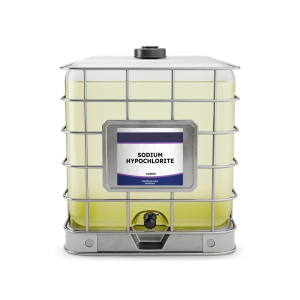
Sodium hypochlorite 40%
310 $Sodium hypochlorite 40 %
L'sodium hypochlorite is an oxidizing and disinfecting agent widely used in the drinking water treatment, wastewater treatment, industry and industrial disinfection. Thanks to its strong disinfectant properties, it effectively eliminates bacteria, viruses and many other micro-organisms present in water.
In the drinking water treatmentsodium hypochlorite is used for water disinfection and chlorinationThis ensures that water is safe and complies with health standards. It is also used in wastewater treatment plants to eliminate pathogens and reduce biological contaminants.
In the industrial applicationssodium hypochlorite is used for plant disinfection, oxidation of certain chemical compounds and treatment of industrial effluents. It is also used in various cleaning and disinfection processes in the food, chemical and processing industries.
Thanks to its high efficiency, sodium hypochlorite is an essential product for water disinfection, oxidation and treatment in a wide range of industrial and environmental applications.
Typical technical data
- Product : Sodium hypochlorite (NaOCl)
- Concentration: 40 %
- Appearance : Yellowish liquid with characteristic chlorine odour
- Main property : Powerful oxidizing and disinfecting agent
- Applications : Drinking water disinfection, wastewater treatment and industrial processes
Thanks to its high efficiency and versatility, sodium hypochlorite is widely used in water treatment systems, industrial plants and disinfection applications.
-
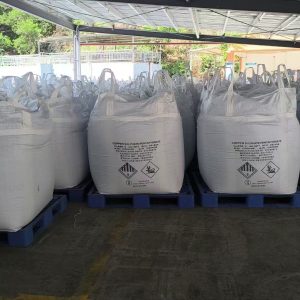
Lead Nitrate 99%
Lead Nitrate (Pb(NO₃)₂)
Visit lead nitrate (Pb(NO₃)₂) is a chemical compound widely used in mining, metallurgical processes and certain industrial chemical processes. Thanks to its specific chemical properties, it plays an important role in a number of industrial applications, particularly in mineral processing.
In the mining sectorlead nitrate is mainly used as a activator in flotation processes and certain gold leaching operations. It improves the efficiency of chemical reactions and optimizes the recovery of precious metals during ore processing.
In some metallurgical and chemical processeslead nitrate is used as a reagent in the manufacture of certain chemical compounds and in laboratory applications.
The use of lead nitrate requires a proper handling and storageThis is because of the toxicity of lead compounds.
Typical technical data
- Product : Lead nitrate (Pb(NO₃)₂)
- Appearance : White crystals
- Solubility : Very soluble in water
- Main application : Mining and metallurgical processes
Price guide
Approximate price: 2,500 - 4,000 USD / tonne
(Price may vary according to purity, product quality and delivery conditions). -
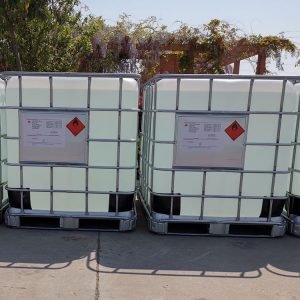
Hydrogen peroxide
700 $Hydrogen peroxide (H₂O₂) 50-60 %
Visit hydrogen peroxide (H₂O₂) is a powerful oxidizing agent widely used in many industrial sectors such as water treatment, mining, chemical industry and industrial bleaching and disinfection processes. Thanks to its strong oxidizing properties and clean decomposition into water and oxygen, it is an effective, environmentally-friendly solution for a variety of industrial applications.
In the water treatmenthydrogen peroxide is used to oxidation of organic and inorganic contaminants, elimination of odours and reduction of certain pollutants. It is also used in certain advanced oxidation processes to improve the quality of water and industrial effluents.
In the mining industryH₂O₂ is used in several processes, in particular for oxidation of certain chemical compounds, ore processing and improving the efficiency of certain chemical reactions in processing circuits.
Hydrogen peroxide is also used in the textile and paper industry for bleachingas well as in various industrial processes requiring a powerful and efficient oxidizing agent.
Typical technical data
- Product : Hydrogen peroxide (H₂O₂)
- Concentration: 50 - 60 %
- Appearance : Clear, colorless liquid
- Main property : Strong oxidizing agent
- Applications : Water treatment, mining, industrial bleaching and chemical processes
Price guide
Approximate price: 700 - 1,200 USD / tonne
(Prices may vary according to concentration, product origin and delivery conditions). -
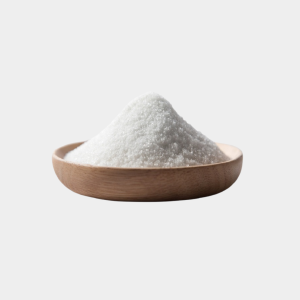
Polyacrylamide
1 800 $Polyacrylamide (Anionic and Cationic)
Visit polyacrylamide (PAM) is a synthetic polymer widely used as flocculant and clarifying agent in many industrial sectors, including drinking water treatment, wastewater treatment, mining and various industrial processes. Thanks to its ability to agglomerate fine particles into larger flocs, it facilitates their separation by decantation or filtration.
In the water and wastewater treatmentpolyacrylamide is used for improve coagulation and flocculation of suspended particlesThis reduces turbidity and improves the efficiency of clarification processes. It also helps to optimize sludge treatment by improving their dehydration.
In the mining sectorpolyacrylamide is used for mineral pulp clarification, tailings decantation and thickener performance enhancement. It enables faster separation of solids and liquids, improving the efficiency of ore processing circuits.
Polyacrylamide is available in various forms, including anionic and cationicto meet the specific needs of different treatment processes and the chemical characteristics of the effluents to be treated.
Typical technical data
- Product : Polyacrylamide (PAM)
- Types : Anionic and Cationic
- Main function: Flocculant and clarifying agent
- Applications : Treatment of drinking water, wastewater, mining and industrial processes
Thanks to its efficiency in flocculation and solid-liquid separation processes, polyacrylamide is an essential product for optimize the performance of water treatment plants and industrial operations.
-
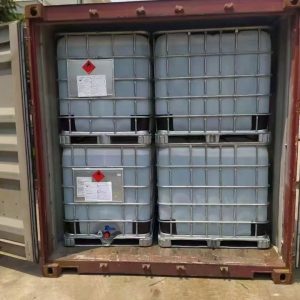
Polyaluminum chloride (PAC)
480 $Aluminium Polychloride (PAC) - Liquid and Solid
Visit aluminum polychloride (PAC) is an inorganic coagulant widely used in drinking water treatment, wastewater treatment and numerous industrial processes. Thanks to its high coagulation efficiency, it rapidly removes suspended particles, colloidal matter and organic impurities from water.
In the drinking water treatment plantsPAC is used for reduce turbidity, improve clarification and facilitate settling of fine particles. It promotes the formation of compact flocs that settle easily, improving the performance of filtration and treatment processes.
In the industrial and municipal wastewater treatmentpolyaluminium chloride is used for elimination of suspended solids, reduction of organic load and elimination of phosphorusThis helps to improve the quality of treated effluent.
Compared to traditional coagulants, PAC offers improved coagulation efficiency, lower sludge production and stable performance over a wide range of pH conditionsThis makes it a widely used solution in modern water treatment systems.
Polyaluminium chloride is available as liquid or solid (powder) formThis allows flexible use according to the needs of treatment plants and industrial processes.
Typical technical data
- Product : Polyaluminum chloride (PAC)
- Form : Liquid or solid (powder)
- Main function: Coagulant for water treatment
- Applications : Drinking water plants, wastewater treatment, industrial effluents
Thanks to its high efficiency and versatility, polyaluminium chloride is a reliable solution for improve the performance of coagulation and clarification processes in water treatment plants.
-
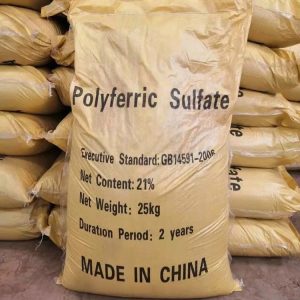
Polyferric Sulfate (PFS)
220 $Polyferric Sulfate (PFS)
Visit polyferric sulfate (PFS) is a high-performance inorganic coagulant widely used in drinking water treatment, municipal and industrial wastewater treatment and various industrial processes. Thanks to its high coagulation and flocculation capacity, it effectively removes suspended solids, colloidal particles and many contaminants from water.
In the drinking water treatment plantsPFS is used to reduce turbidity, improve clarification and promote the formation of dense flocs that can be easily separated by decantation or filtration. It also helps improve the overall efficiency of water treatment systems.
In the industrial and municipal wastewater treatmentpolyferric sulfate is particularly effective for phosphorus elimination, organic load reduction and improved clarification process performance. It is widely used in industries such as textiles, paper, chemicals and food processing.
Compared with traditional coagulants, PFS offers a number of advantages, including high coagulation efficiency, rapid floc formation and reduced sludge productionwhich improves treatment plant performance.
Typical technical data
- Product : Polyferric Sulfate (PFS)
- Form : Liquid or solid powder
- Main function: Coagulant for water treatment
- Applications : Treatment of drinking water, municipal wastewater and industrial effluents
Price guide
Approximate price: 220 - 450 USD / tonne
(Price may vary according to concentration, product quality and delivery conditions). -
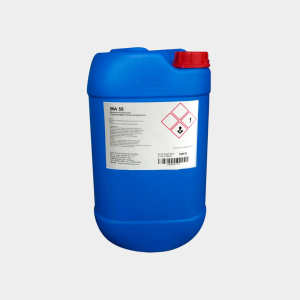
RO Anti-Scalant
890 $Reverse Osmosis Anti-Scalant (RO Anti-Scalant)
L'antiscalant for reverse osmosis (RO Anti-Scalant) is a chemical product specially formulated for prevent the formation of mineral deposits (scaling) on the membranes of reverse osmosis systems. It plays an essential role in protecting membranes and improving the overall performance of water treatment plants.
Inreverse osmosis (RO)the formation of salt deposits such as calcium carbonate, calcium sulfate, barium sulfate and strontium sulfate can reduce membrane efficiency, leading to a significant drop in flow rate and quality of produced water. The use of an antiscalant helps to keep these salts in solution and prevent them from precipitating on the membranes.
Antiscalants are used extensively in seawater desalination, industrial water treatment systems, drinking water production plants and industrial water recycling units. Their use contributes to extend membrane life, reduce chemical cleaning operations and optimize RO system performance.
Typical technical data
- Product type : Antiscalant for RO membranes
- Function: Mineral deposit prevention and membrane protection
- Compatible with : polyamide membranes and industrial RO systems
- Application: Reverse osmosis systems for drinking water, industrial water and desalination
Thanks to its effectiveness in controlling scaling, RO antiscalant is an essential solution for guarantee the reliability, performance and durability of modern water treatment systems.
-
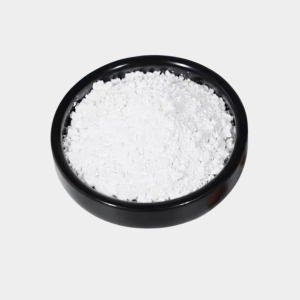
Slaked Lime
280 $Hydrated lime (Calcium hydroxide) 94-98 %
Visit slaked limealso known ascalcium hydroxide - Ca(OH)₂is a product widely used in many industrial sectors such as water treatment, mining, chemical industry and environment. Thanks to its alkaline properties, it plays an essential role in the following processes neutralization, pH correction and effluent treatment.
In the drinking water and wastewater treatmenthydrated lime is used for adjust pH, remove heavy metals, precipitate impurities and improve water clarification. It also contributes to the chemical stabilization of water and the reduction of corrosion in distribution networks.
In the mining sectorhydrated lime is widely used for pH control in ore treatment processesIt is used to optimize chemical reactions and improve the overall efficiency of ore processing operations. It optimizes chemical reactions and improves the overall efficiency of ore processing operations.
Hydrated lime is also used in industrial smoke treatment, soil stabilization, acid neutralization and environmental management of industrial effluents.
Typical technical data
- Product : Slaked lime - Calcium hydroxide (Ca(OH)₂)
- Purity: 94 - 98 %
- Appearance : Fine white powder
- Main property : Highly alkaline product for neutralization and pH control
Thanks to its effective chemical properties and industrial versatility, hydrated lime is an essential solution for water treatment, optimization of mining processes and environmental management of industrial facilities.
-
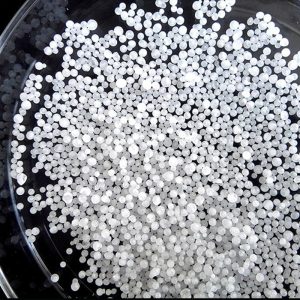
Caustic soda (Flakes - Pearls)
680 $Caustic soda (Flakes - Pearls)
Visit caustic sodaalso known as sodium hydroxide (NaOH)is a strong base widely used in many industrial sectors such as water treatment, mining, chemical industry and various industrial processes. Thanks to its high alkalinity, it plays an essential role in the following operations neutralization, pH adjustment and chemical transformation.
In the water and wastewater treatmentcaustic soda is used for correct pH, neutralize acidic effluents and improve the efficiency of certain treatment processes. It also contributes to the chemical stabilization of water in industrial and municipal installations.
In the mining sectorcaustic soda is used in a number of different processes mineral processing and preparation of chemical solutionsIt is also used for cleaning equipment and preparing certain industrial chemical solutions. It is also used for cleaning equipment and preparing certain industrial chemical solutions.
Caustic soda is also an important raw material in thechemical industryThe company's products include the following detergents, industrial chemicals, paper, textiles and various chemical compounds.
It is generally available under in flake or pearl formThey are ideal for handling and dissolving in a wide range of industrial applications.
Typical technical data
- Product : Caustic soda - Sodium hydroxide (NaOH)
- Form : Flakes or pearls
- Main property : Strong base for neutralization and pH adjustment
- Applications : Water treatment, chemical industry, industrial processes and mining applications
Thanks to its high chemical reactivity and versatility, caustic soda is an essential product for many industrial applications requiring effective alkalinity and pH control.
-
Polyferric sulfate
210 $Polyferric sulfate (PFS)
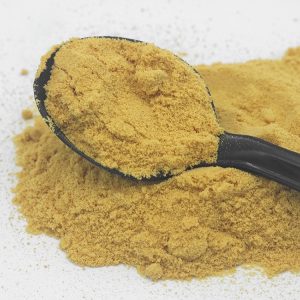
Visit polyferric sulfate (PFS) is an advanced inorganic coagulant widely used in drinking water treatment, wastewater treatment and various industrial applications. Thanks to its excellent coagulation and flocculation properties, it effectively removes suspended solids, colloidal particles and many contaminants from water.
In the drinking water treatment plantsPFS is used to reduce turbidity, improve clarification and facilitate the formation of dense, easily settleable flocs. It also helps to improve the performance of filtration systems and produce better quality water.
In the municipal and industrial wastewater treatmentpolyferric sulfate is particularly effective for eliminating organic matter, reducing phosphorus and improving the performance of clarification processes. It is also used to treat industrial effluents from a variety of industries.
Compared with traditional coagulants, PFS offers a number of advantages, including high coagulation efficiency, rapid floc formation and reduced sludge productionThis improves the overall efficiency of water treatment systems.
Typical technical data
- Product : Polyferric sulfate (PFS)
- Form : Liquid or solid (powder)
- Main function: Coagulant for water treatment
- Applications : Drinking water plants, wastewater treatment and industrial effluents
Price guide
Approximate price: 220 - 450 USD / tonne
(Price may vary according to concentration, product quality and delivery conditions). -
Sodium sulfide
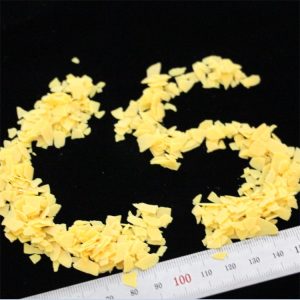
450 $Sodium sulfide (Na₂S)
Visit sodium sulfide (Na₂S) is a chemical compound widely used in several industrial sectors, including mining, leather processing, paper manufacturing and various chemical processes. Thanks to its reducing properties and high chemical reactivity, it is an important product in many industrial applications.
In the mining sectorSodium sulphide is used in a number of processes, including flotation and ore processingfor the separation and recovery of various metallic minerals. It helps improve the efficiency of certain chemical reactions in processing circuits.
In the leather industrySodium sulfide is widely used in the following processes hair removal and skin treatmentThis facilitates the removal of hair and the preparation of hides for subsequent tanning stages.
In the paper industryIt is used in certain chemical processes for pulp production and in other industrial applications requiring reducing agents.
Sodium sulfide is also used in a number of chemical and industrial applicationsThese include chemical manufacturing, industrial water treatment and various transformation processes.
Typical technical data
- Product : Sodium sulfide (Na₂S)
- Appearance : Pale yellow flakes or granules
- Solubility : Soluble in water
- Main property : Reducing agent and chemical reagent
Main applications
- Ore treatment and mining processes
- Leather industry (dehairing)
- Paper industry
- Chemical and industrial processes
Price guide
Approximate price: 400 - 750 USD / tonne
(Price may vary according to purity, product shape and delivery conditions). -
Sodium thiosulfate
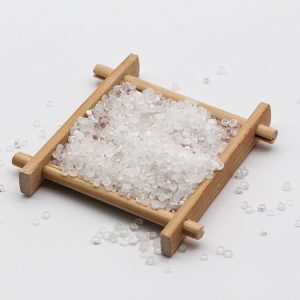
300 $Sodium thiosulfate (Na₂S₂O₃)
Visit sodium thiosulfate (Na₂S₂O₃) is a chemical compound widely used in several industrial sectors, including water treatment, mining, photography and various chemical processes. Thanks to its reducing properties and its ability to neutralize certain oxidizing agents, it is an important product in many industrial applications.
In the water treatmentsodium thiosulfate is used for neutralization of chlorine and oxidizing agents present in drinking water or industrial effluents. It eliminates excess chlorine after disinfection processes, protecting equipment and improving treated water quality.
In the mining industryIt is used in certain metallurgical and chemical processes, in particular for treatment of precious metals and neutralization of certain chemical reagents used in mining operations.
Sodium thiosulfate is also used in the photographic industryIt was used as a fixing agent to dissolve unexposed silver salts in photographic film and paper.
Thanks to its versatility and effective chemical properties, sodium thiosulphate is an important product for industrial, environmental and chemical applications.
Typical technical data
- Product : Sodium thiosulfate (Na₂S₂O₃)
- Form : White crystals or powder
- Solubility : Very soluble in water
- Main property : Chlorine reducing and neutralizing agent
- Applications : Water treatment, mining, chemical processes and photography
Price guide
Approximate price: 300 - 550 USD / tonne
(Price may vary according to purity, product shape and delivery conditions).